The Bubba Gump Shrimp Club Presents
October 11 – 17, 2026
Section I
Six men. One boat. Seven days. An estuary full of shrimp. This is the operational plan.
The Crew
The Bubba Gump Shrimp Club — Dad + 5 sons + ?? grandsons
Vessel
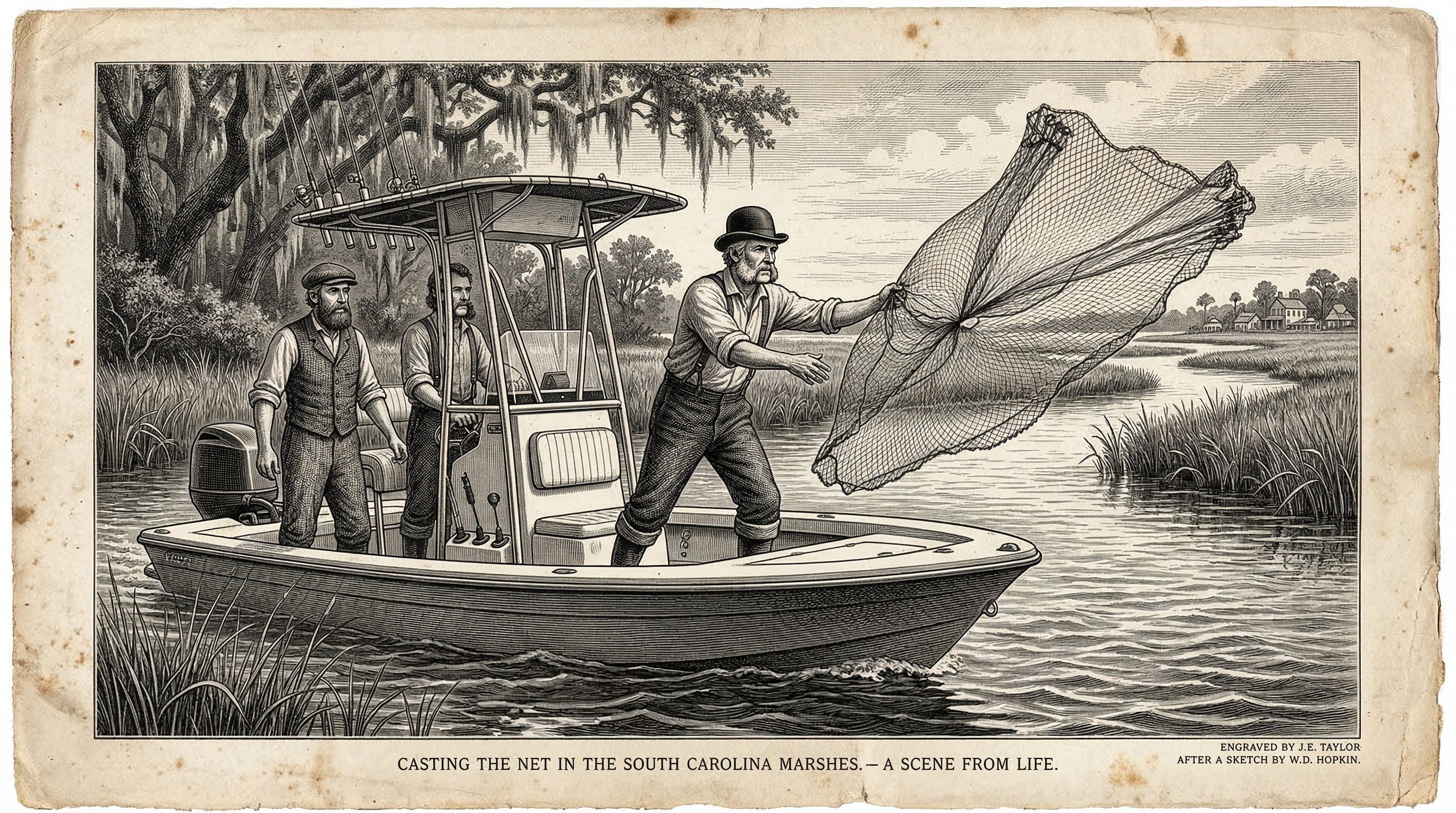
190 Montauk w/ T-Top
Tow Vehicle
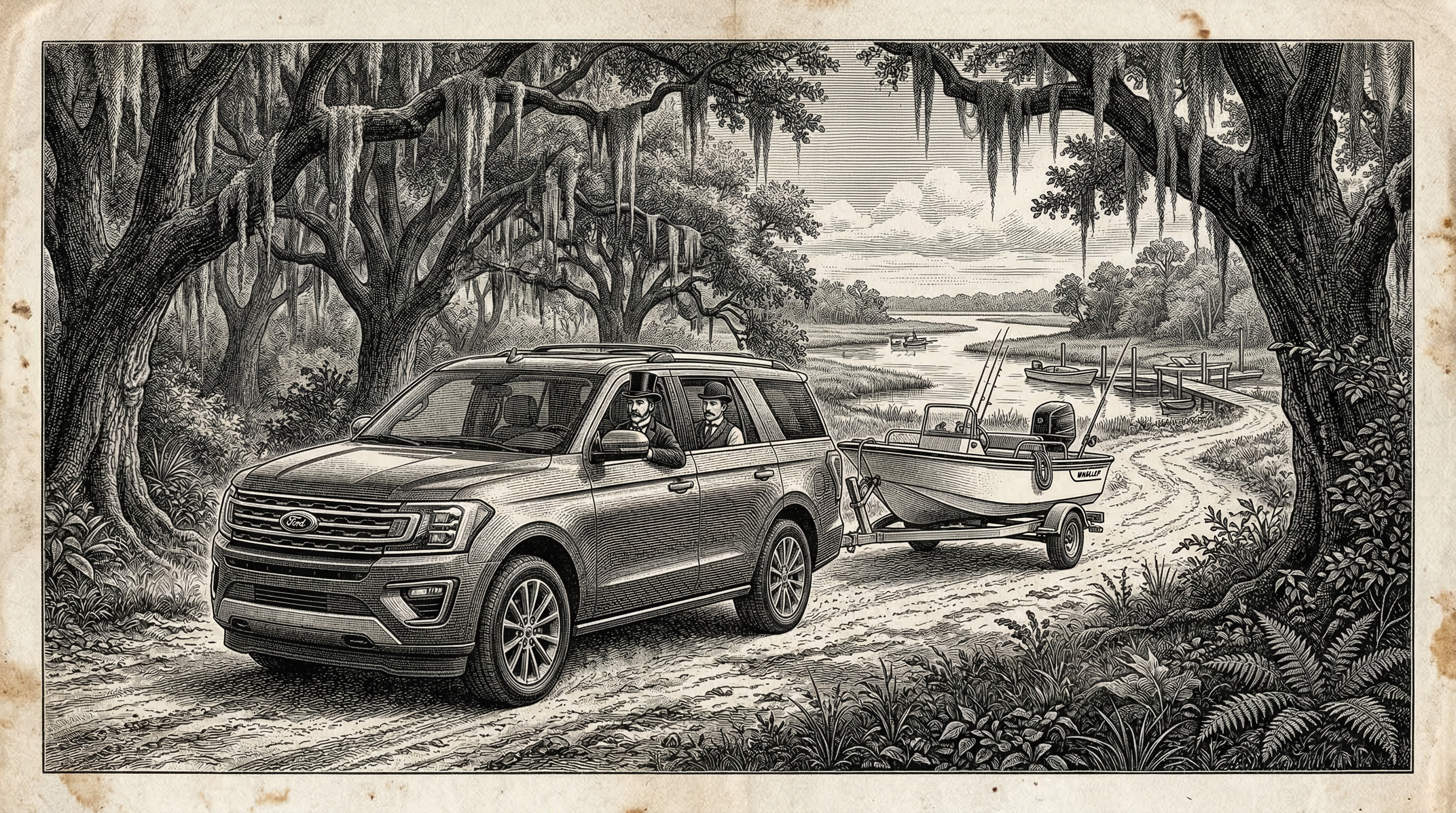
2005 Ford Expedition
Launch Point
Live Oak Landing, Oyster Row Ln, Edisto Island, SC 29438
Lodging
Grant's Quarters II — 3602 Docksite Rd, Edisto Island — 4BR / 3.5BA, Sleeps 12
Target Zone
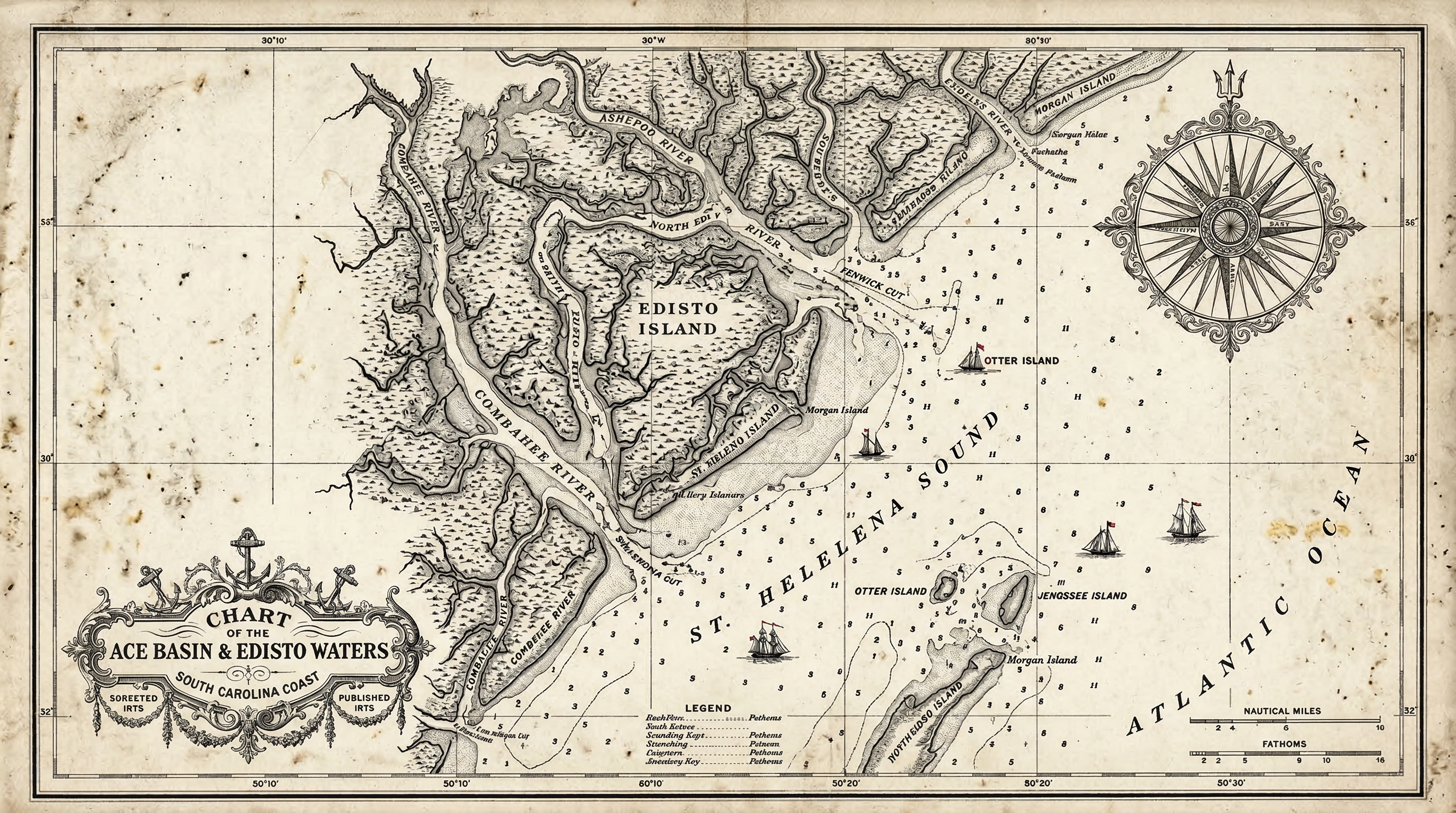
ACE Basin — 32°29'10.9"N 80°26'42.0"W
Zone Transit
~30 min boat ride from Live Oak Landing
Season
SC Bait Shrimping Season — 60 days starting mid-September
Section II — Primary Intelligence
Daily departure times calculated from NOAA tide predictions for South Edisto River (Station 8666616). The objective: poles in the water during peak current flow — the "moving tide" window when shrimp are actively migrating through creek channels.
New moon on Oct 10 produces spring tides — strongest currents early in the week. As the moon waxes toward first quarter (Oct 18), tidal range weakens into neap tides. Front-load your effort Sun–Tue.
The Formula: Poles in the water 1.5 hrs before the best high tide. Working backward: 20-min drive + ice/gas + 20-min launch + 30-min boat ride + 30-min to plant poles = 3 hr 15 min before high tide departure from Grant's Quarters.
| Day | Date | Target High Tide | Poles-In Target | Depart House | Weather | Tide Rating | Notes |
|---|---|---|---|---|---|---|---|
| Sun | Oct 11 | 10:20 AM (7.51 ft) | 8:50 AM | 7:05 AM | 79°/60°F Wind 11 mph SSW |
Best tide of the week — highest water (7.51 ft) means strongest current flow. Arrival day mission: hit the water immediately. Morning high maximizes daylight hours for shrimping on both the flood and ebb. | |
| Mon | Oct 12 | 10:59 AM (7.39 ft) | 9:29 AM | 7:44 AM | 79°/60°F Wind 10 mph SSW |
Strong tide, mid-morning high. Shrimp the flood tide in, then continue through the first hour of ebb. Excellent day. | |
| Tue | Oct 13 | 11:37 AM (7.18 ft) | 10:07 AM | 8:22 AM | 78°/59°F Wind 11 mph SSW |
Still a powerful tide. Later departure allows a relaxed breakfast. Perfect conditions for the ACE Basin channels. | |
| Wed | Oct 14 | 12:17 PM (6.93 ft) | 10:47 AM | 9:02 AM | 78°/59°F Wind 11 mph SSW |
Tides weakening as moon wanes. Still solid current but less extreme water exchange. Consider night session on PM high (none listed — tides are single-high pattern this day). | |
| Thu | Oct 15 | 1:00 PM (6.66 ft) | 11:30 AM | 9:45 AM | 78°/60°F Wind 12 mph SSW |
Moderate tide. Latest departure of the week — sleep in. Afternoon heat may push shrimp deeper; try placing poles closer to channel edges. | |
| Fri | Oct 16 | 1:49 PM (6.43 ft) | 12:19 PM | 10:34 AM | 79°/61°F Wind 11 mph SSW |
Weakest tide of the week. Smaller tidal range means less current. Move poles closer to deep holes where shrimp concentrate during weak tides. Focus bait on channel drops. | |
| Sat | Oct 17 | 2:41 PM (6.27 ft) | 1:11 PM | 11:26 AM | 78°/60°F Wind 10 mph SSW |
Departure day. Weakest tide but latest start — perfect for packing up in the morning and running one final sortie. Quick limit possible if you find the right deep hole. |
Depart House
7:05 AM
Best tide of the week — highest water means strongest current. Hit the water immediately on arrival day.
Depart House
7:44 AM
Strong tide, mid-morning high. Shrimp the flood tide in, then continue through the first hour of ebb.
Depart House
8:22 AM
Still a powerful tide. Later departure allows a relaxed breakfast.
Depart House
9:02 AM
Tides weakening as moon wanes. Still solid current but less extreme water exchange.
Depart House
9:45 AM
Moderate tide. Latest departure of the week — sleep in. Try placing poles closer to channel edges.
Depart House
10:34 AM
Weakest tide of the week. Move poles closer to deep holes where shrimp concentrate.
Depart House
11:26 AM
Departure day. Latest start — perfect for packing up and running one final sortie.
Pro Tip — Work Both Tides: Don't pack up after high tide. The first 1–2 hours of the outgoing (ebb) tide can be equally productive as shrimp exit the marsh grass and head back toward deeper channels. Keep bait fresh by tossing 1–2 new hockey-puck patties per pole after the tide turns. Many experienced shrimpers report their biggest hauls during this ebb-tide window.
Alternate Strategy — Night Ops (Clear Water): The ACE Basin's southern creeks can run clear. In clear water, shrimp are harder to attract during daylight — they hold tight to cover. If daytime sets are slow, consider evening sessions on the PM high tide. Place poles at low tide near marsh grass in 1 foot of water; as the tide rises after dark, shrimp stack up on the bait en route to the grass. Headlamps and reflective pole tape are essential for night operations.
Section III
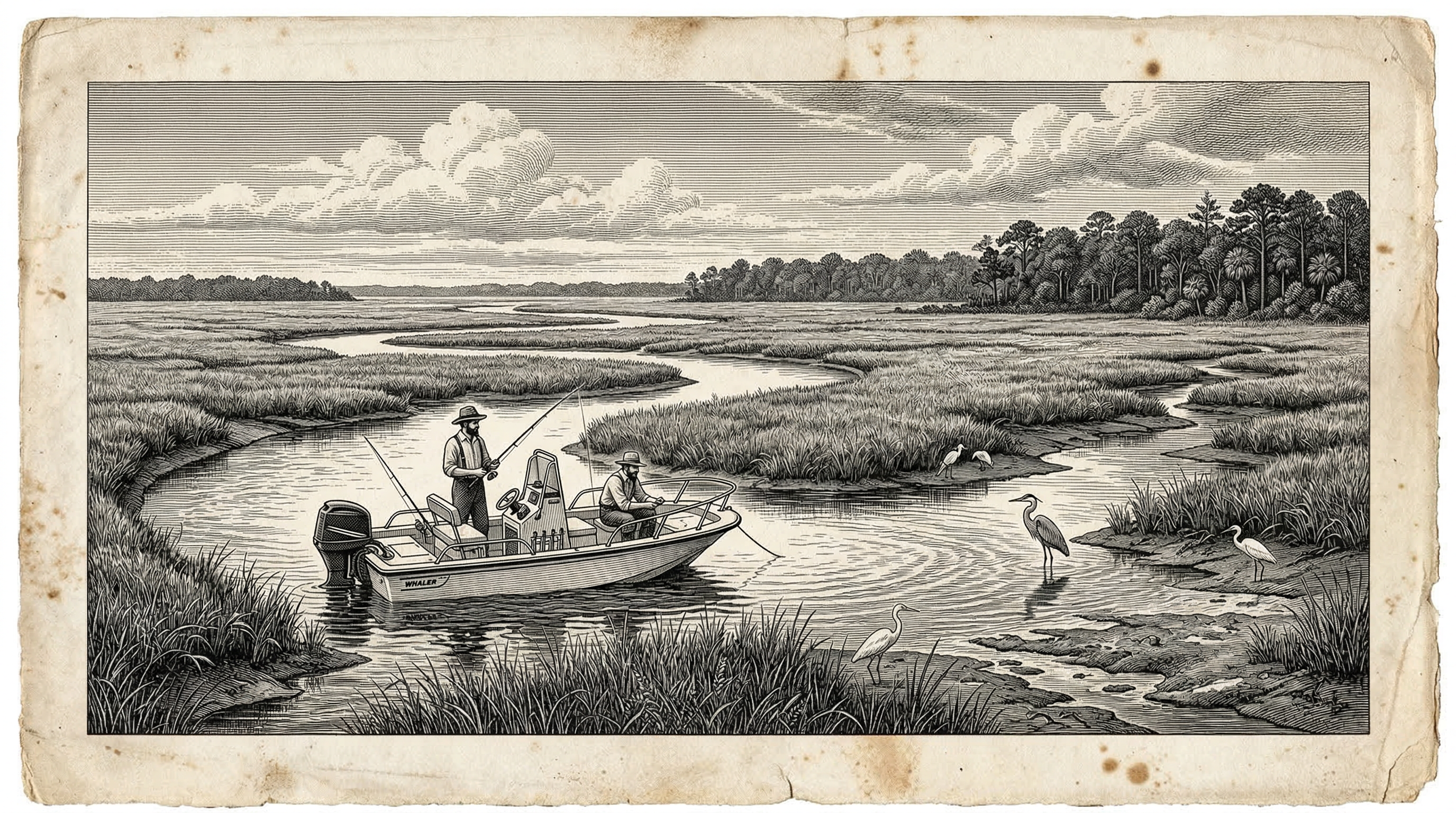
The essential field manual — from pole placement to the final cast.
Channel Edge Doctrine
| Formation | 10 poles, single-file, within 100 linear yards |
| Position | Channel edge — firm mud where bottom meets the drop |
| Depth | Water adequate through tidal cycle — not dry at low, not submerged at peak |
| Pole Length | 12–13 ft to cover tidal range |
| Bottom | Firm, compacted mud — avoid pluff mud, oyster shells, sand |
| Intel | Mark productive sets with GPS — honey holes repeat at the same tidal stage |
The Hockey-Puck Patty
| Binder | Bait Binder + ground menhaden fish meal |
| Shape | Flat disc ("hockey puck") — won't roll in current |
| Placement | 2–4 patties per pole, extras between poles for scent corridor |
| Refresh | Every 45–60 min as bait dissolves |
| Advantage | Cleaner than clay-mud method, holds in current, steady dissolve rate |
Fish the Moving Tide
| Rising Tide | Shrimp migrate from deep holes toward marsh grass — set up along channel edges |
| Falling Tide | Shrimp exit grass for deeper water — set up near grass lines |
| Slack Water | Dead period — pull poles, refresh bait, wait for turn |
| Murky Water | Your best friend — dramatically improves daytime shrimping |
| Clear Water | Shift to evening/night ops — shrimp venture out after dark |
| Cardinal Rule | Never fish slack water. Predators move in, shrimp stop migrating. |
Full Open, Every Time
| Net Size | 6–8 ft radius (most people), 8–10 ft for experienced casters |
| Mesh | Min 1/2" square (1" stretched). 5/8" sinks faster for larger shrimp |
| Weight | Match to water depth — heavy nets fatigue you fast in shallows |
| Sequence | Start at pole #1 → cast a few times → drift to #2 → repeat to #10 → loop back |
| Boat Driver | Critical — proper positioning for the throw, especially on windy days |
| Prep | Practice throws in the yard before season opens |
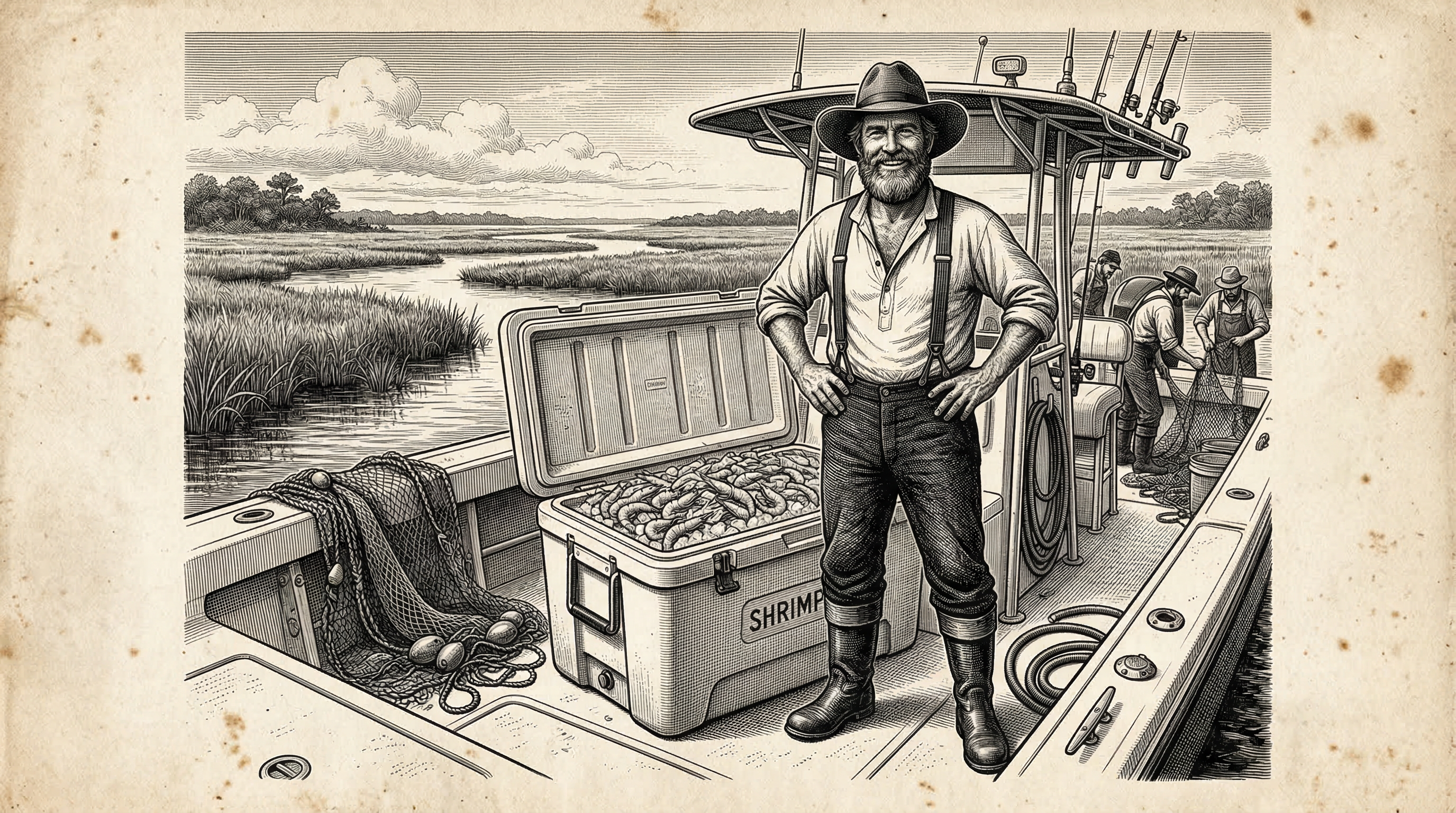
Section IV
Sweet spots, regulations, and hard-won wisdom from the Ashepoo, Combahee, and Edisto river system.
Intel 01
The ACE Basin's tidal creeks near 32°29'10.9"N 80°26'42.0"W are your primary zone. Look for creek bends with firm mud bottoms near channel drops. If a spot is cold after 45 minutes, move 200 yards up or down the creek. Honey holes tend to produce at the same tidal stage year after year — mark every productive set with GPS.
Intel 02
Murky, tannin-stained water is your ally. Clear water drives shrimp deeper and tighter to cover. After heavy rain, river mouth areas run muddy and productive. Crystal clear? Shift to evening/night ops or look for areas with more river influence and natural turbidity.
Intel 03
White shrimp with red/pink legs are on the move — falling water temps drive outward migration. They use channels as highways and stop at marsh edges to feed on rising tides. A strong flood tide funnels them past your poles; your bait concentrates them in a catchable zone.
Intel 04
SC requires a shrimp-baiting license. Max 10 poles per boat, all within 100 linear yards. Poles must be 50+ yards from any dock, landing, or ramp, and 25+ yards from other shrimpers' sets. Daily limit: 48 quarts whole or 29 quarts headed per set of poles. Season runs 60 days from mid-September.
Intel 05
New Moon on Oct 10 means our first days ride the spring-tide surge — the strongest currents of the lunar cycle. As the moon waxes toward first quarter (Oct 18), tidal range weakens into neap tides. The chart above tells the story: front-load effort on Sunday through Tuesday when the water really moves.
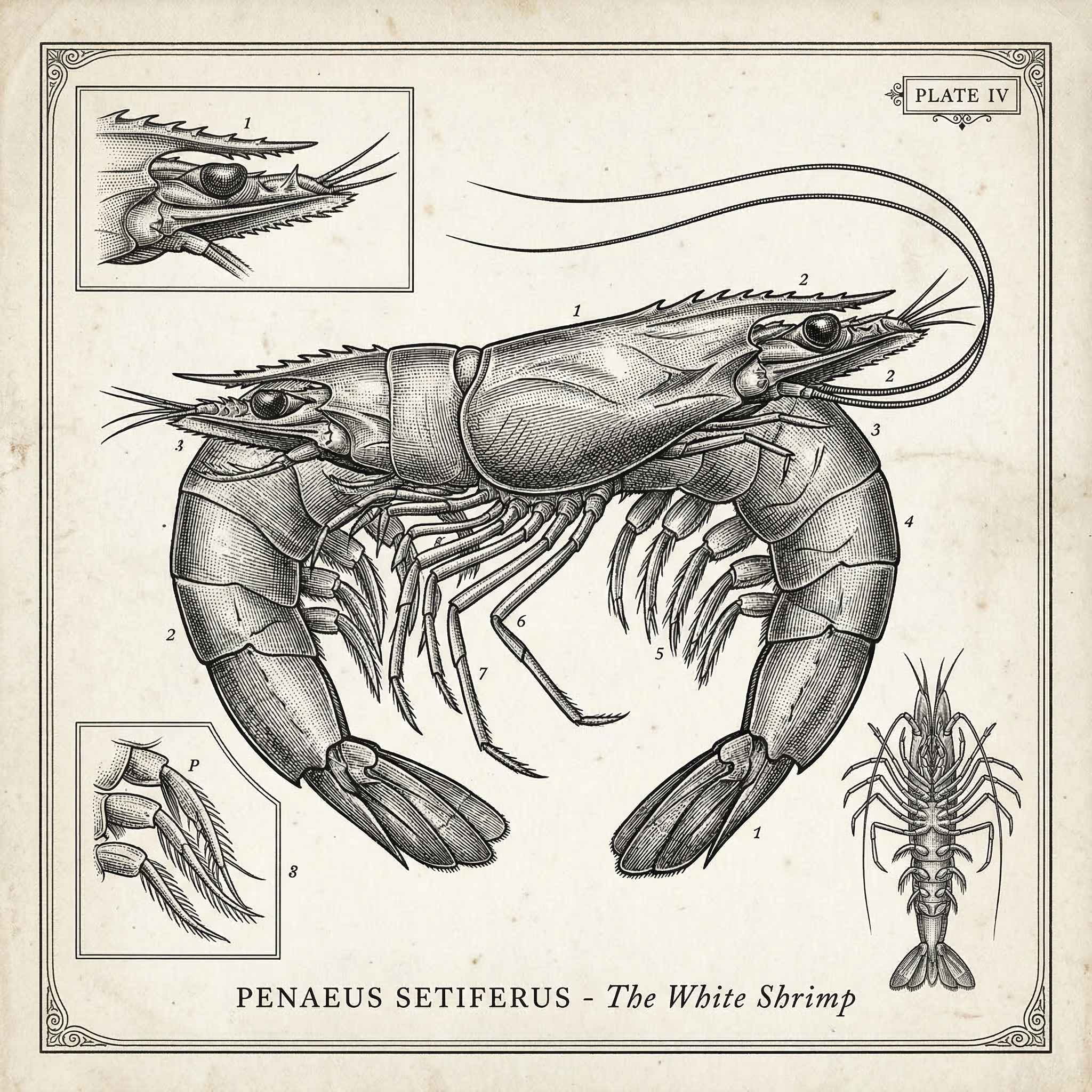
Plate IV — Penaeus Setiferus, The White Shrimp
The Atlantic white shrimp (Litopenaeus setiferus) is the primary target of the South Carolina bait shrimping season. Adults reach 7–8 inches and migrate seaward through estuarine creeks as water temperatures drop in autumn — right into your waiting nets.
Key identification: translucent body with a greenish-gray hue, long antennae, and — when they're on the move — distinctive red or pink legs. That color is your signal that the autumn migration is underway and the shrimping is about to get good.
White shrimp are primarily nocturnal feeders, spending daylight hours in deeper channels and emerging onto shallow mud flats and marsh edges as darkness falls or when turbid water provides cover. Your bait patties exploit this behavior, creating an irresistible scent trail that draws shrimp out of their channel highway and into your casting zone.
Section V — Historical Intelligence
Right on Oyster Row Lane — the same road as Live Oak Landing — sits one of America's most remarkable scientific landmarks.
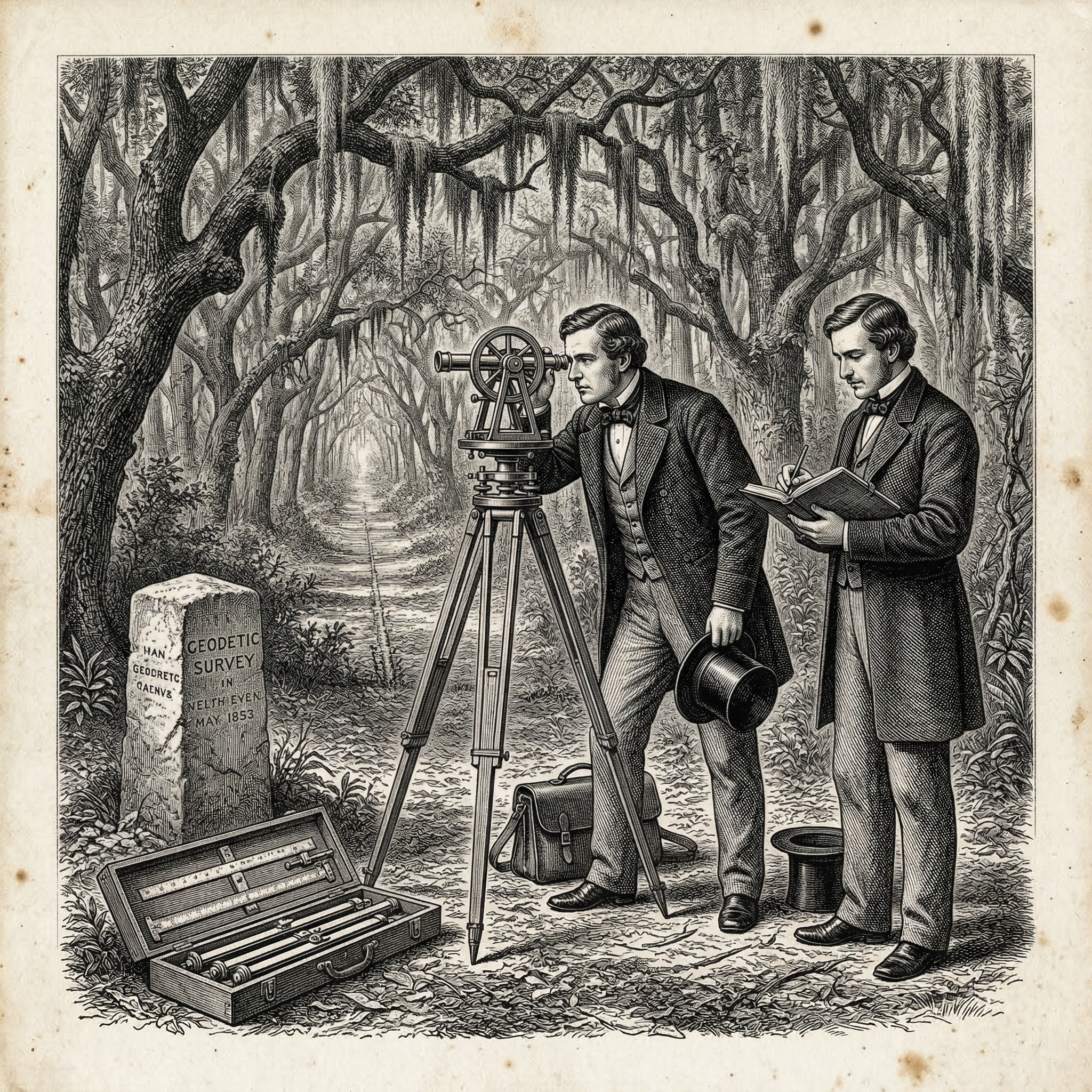
In January 1850, Professor Alexander Dallas Bache — great-grandson of Benjamin Franklin and Superintendent of the U.S. Coast Survey — led a team to this remote sea island to accomplish something extraordinary: measure a baseline so precisely that the entire South Carolina coastline could be mapped from it through triangulation.
The project was born of necessity. President Thomas Jefferson had commissioned the Coast Survey decades earlier, but the technology of the era made accurate measurement brutally difficult. Metal surveying rods expanded and contracted with temperature, introducing errors that compounded over distance. Bache's ingenious solution was the "Bache bar" — compensating rods made of iron and brass, metals whose expansion rates partially cancel each other out, dramatically reducing thermal error.
Bache's team hand-cleared a 20-yard-wide, 6.68-mile-long straight path across Edisto Island through dense maritime forest. Over 14 grueling days, they measured this baseline using their compensating bars, establishing geodetic reference points marked with granite monuments.
Astonishing Accuracy: When the Edisto Baseline was re-surveyed using modern GPS technology in the 1990s — nearly 150 years later — Bache's measurement was found to be off by less than 2.5 inches over its entire 6.68-mile length. This baseline became the foundation for triangulating the entire South Carolina coast, reducing the shipwrecks that plagued the treacherous waters off Charleston and the Sea Islands.
On your way to and from Live Oak Landing each day, you'll pass the very ground where Bache's survey team cut their line through the oaks. These granite markers — some still visible in the woods along the road — are among the most significant geodetic monuments in American history. The same precision that mapped this coastline and saved countless sailors now lives in the GPS that guides your Montauk through the ACE Basin's winding creeks. The tradition of measuring, observing, and mastering this Lowcountry landscape stretches from Bache's iron bars to your bait poles.
Section V.II — Cryptozoological Intelligence
The true story of how 2,000 monster shrimp broke out of a South Carolina lab and colonized the entire Atlantic seaboard.
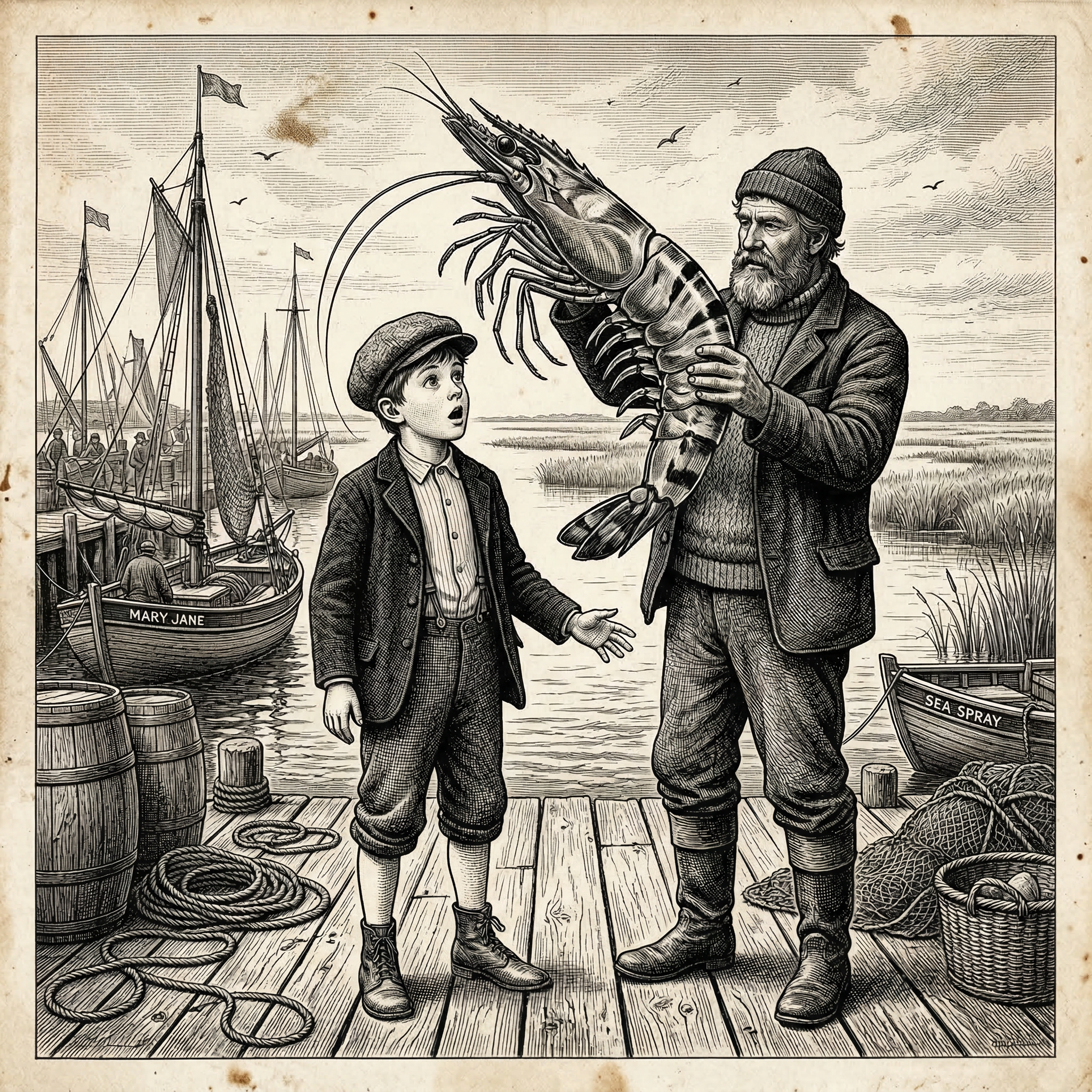
In August 1988, a misplaced screen at the Waddell Mariculture Center in Beaufort County, South Carolina, allowed more than 2,000 Asian tiger shrimp (Penaeus monodon) to escape into the open waters of the South Atlantic. These were not your everyday white shrimp. Tiger shrimp grow up to 13 inches long — the length of a man's forearm — and can weigh nearly 11 ounces. They are black with vivid tiger stripes, aggressive predators that eat crabs, clams, and other shrimp, and they grow to three times the size of the native white shrimp you'll be baiting for.
Researchers scrambled. About 300 were recaptured over the next six months, but the rest vanished into the Lowcountry creeks. For nearly two decades, it seemed like the escape was a footnote — the shrimp had failed to establish a population. The facility quietly halted its tiger shrimp breeding program.
The Return: Then, in 2006, tiger shrimp started reappearing in commercial trawl catches from North Carolina to Texas. Whether the original Waddell escapees had been quietly breeding all along, or a second wave arrived from a Caribbean aquaculture escape in the Dominican Republic, or warming waters simply expanded their range northward from Brazil — nobody knows for certain. What is known: sightings jumped from 6 in 2006 to 678 in 2011, a tenfold increase. NOAA scientists now consider them effectively "established" in U.S. waters — nearly impossible to eradicate.
What to Do If You Catch One: If someone in the crew pulls a pole and finds a forearm-sized, black-and-yellow-striped shrimp sitting in the cast net alongside a pile of 3-inch whites — congratulations, you've met a descendant of the Waddell jailbreak. Report it to SCDNR — they track every sighting. And yes, they are reportedly delicious in butter sauce. Consider it a bonus.
The native white shrimp you're targeting max out around 7–8 inches. An adult Asian tiger shrimp reaches 13 inches and nearly a quarter-pound. If the white shrimp is a creek minnow, the tiger shrimp is a largemouth bass — same family, utterly different animal. The fact that thousands of these creatures are prowling the same ACE Basin channels you'll be baiting adds a certain edge to the proceedings.
Section VI — Provisions
The field ration of champions. No shrimping expedition is complete without the humble can that fed an army and a nation.
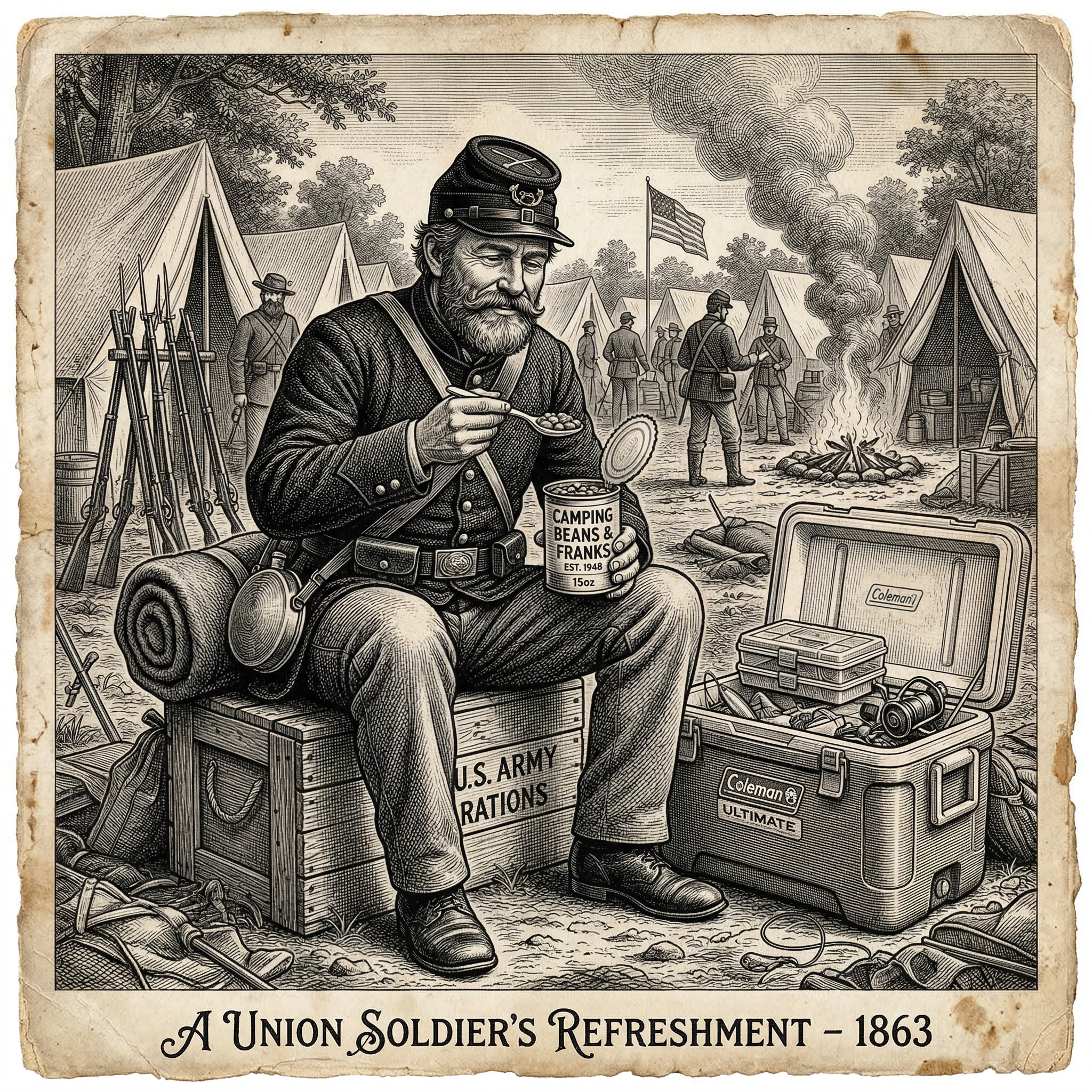
In 1861, while the nation tore itself apart, Gilbert Van Camp and his family opened a small grocery in Indianapolis to sell their home-canned foods. Pork and beans was already the working man's meal of the 19th century, but Van Camp saw a bigger opportunity: the Union Army needed provisions that could travel far and last long.
Van Camp secured a federal contract to supply tinned food to Union soldiers, and in doing so, helped pioneer the American canned food industry. By the 1880s, the Van Camp factory in Indiana was producing 8 million cans of pork and beans a year at six cents a can — fuel for a nation on the move.
The company flourished for 70 years before being acquired by Stokely Brothers, but the Van Camp name endured. Sometime in the 1960s, as America embraced convenience and the dual-income household transformed the kitchen, the legendary "Beanee Weenee" name appeared on cans for the first time — hot dogs nested in baked beans, ready to eat cold from the can or heated in 90 seconds.
By the 1980s, the Beanee Weenee jingle was inescapable, and the can had cemented its place in the American pantry alongside Spam and Chef Boyardee. From a Civil War soldier's haversack to a college dorm shelf to the cooler of a center-console boat in the ACE Basin — Van Camp's Beanee Weenee remains the ultimate provision: shelf-stable, calorie-dense, and unashamed of what it is.
Pack at least a case for the trip. Eat cold between casts. This is the way.